
NarrynA
Our Collections
The Journals of Captain Andrew Haig
The Haig Journals project
In 2018 Narryna volunteers and staff began a project aimed at transcribing the journals of Captain Andrew Haig. Some of the journals, held by the Tasmanian Archives and Heritage Office (TAHO), had previously been partly transcribed with sections of interest to Narryna noted. However, a complete transcription of all volumes held at the archives had not been undertaken.
With an enthusiastic group of volunteers on board to support the project, transcribing commenced in earnest with the aim to have the journals available to anyone who might be interested in Haig’s maritime journeys. It would take almost eight years for the final work to be completed.
A grant provided by TasPorts in 2022 allowed Narryna to publish hard and soft copies of the first tranche of journals. It was decided that the later journals pertaining to Haig’s time in Hobart would be an appropriate and achievable goal. The following journals were published in 2023 In two volumes:
Volume 1 1834 – 1838, 1835 – 1840 & 1838 – 1840
Volume 2 1841 – 1843 & 1852
A second grant from the Australian National Maritime Museum allowed Narryna to publish the remaining volumes which were completed in 2025, these include:
Volume 1 1820 - 1823 & 1821 – 1823
Volume 2 1816 – 1820, 1823 – 1824 & 1825 – 1827
We are grateful for the generous support of TasPorts and the Australian National Maritime Museum, without their support, this historically significant project could not have been completed.
We hope you enjoy reading these journals as much as we have enjoyed transcribing them!
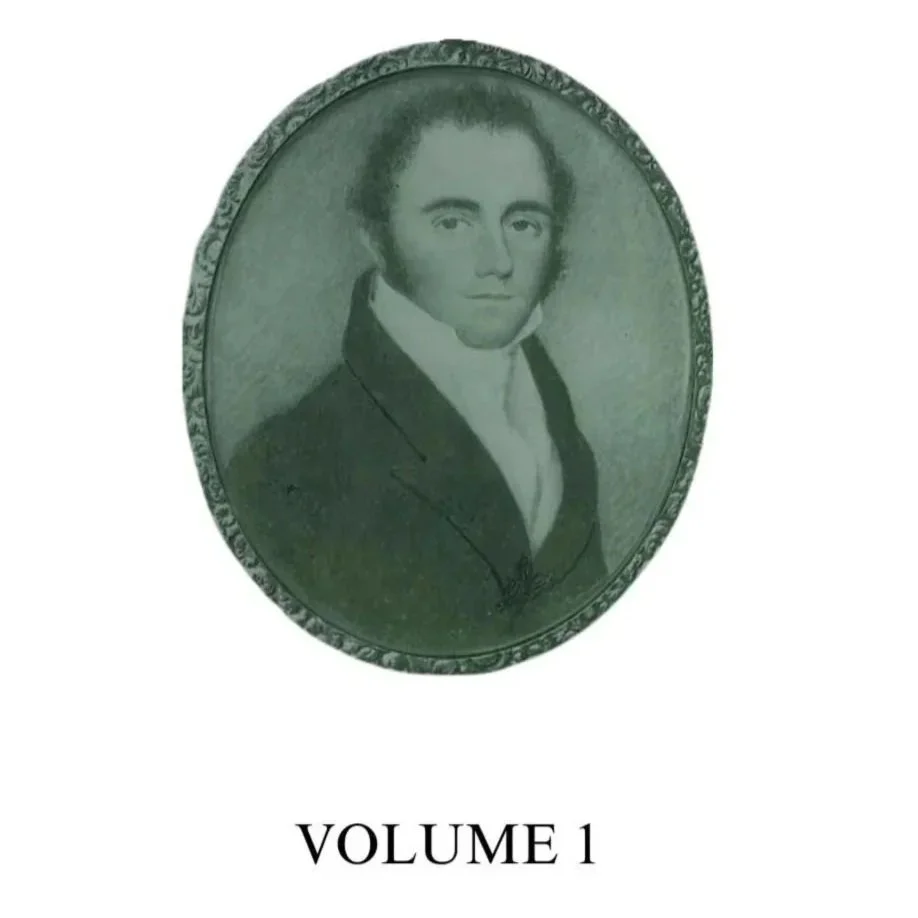
Volume 1 Concerning the years 1834 - 1840
Captain Andrew Haig's journals (1834–1840) offer a personal account of life in Hobart during the colony's economically challenging 1830s. They reveal his struggles to establish himself as a merchant after a successful career at sea, marked by financial setbacks, failed ventures, and frequent frustration with business associates and the colonial economy. Despite these difficulties, Haig remained determined, supported by his wife Elizabeth, who played an active role in the family's finances. The journals also document their domestic life, including family illnesses, servant management, and the long, troubled construction of Narryna, which the family finally occupied in 1840. Together, they provide a valuable insight into the realities of business, family life, and resilience in early colonial Hobart.
Trypot c1840
Cast iron, British maker unknown
This large caudron belongs to the age of deep sea whaling in pursuit of the sperm whale (Physeter macrocephalus). Before the advent of the petrochemicals industries around 1860, whale oil was used to lubricate machinery, provide the fuel for domestic and street lighting and was the basis for perfumes, soap and some margarines. Whale flesh was boiled (or rendered) in caudrons like this which were positioned above fires on lead trays on the ship’s deck. The resulting liquid whale oil was then decanted into casks. A fire escaping from the furnace was fatal to operations. Caudrons often found their way to rural properties where they were used to render down sheep at times of drought and agricultural depression.
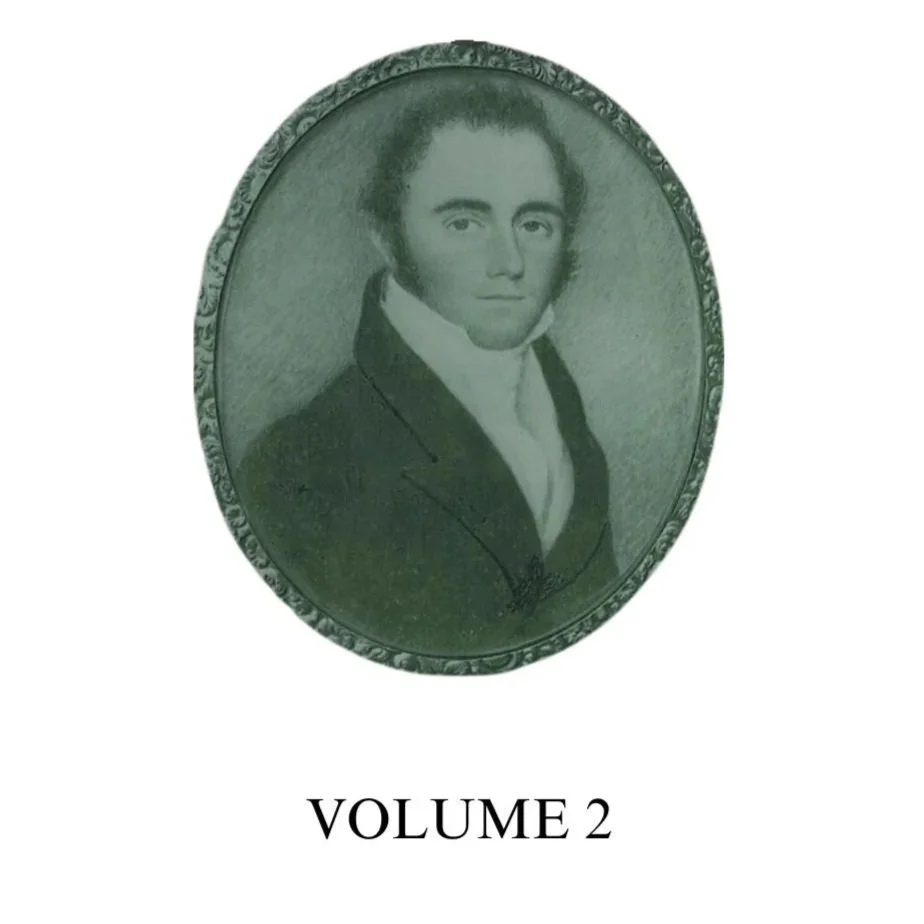
Volume 2 concerning the years 1841 - 1843 & july 1852
By the time the Haig family moved into Narryna in October 1840, Andrew Haig was burdened by mounting debt despite the appearance of prosperity. To meet everyday expenses, he and Elizabeth mortgaged the house, attempted to sell or lease other properties, and sought additional income through teaching and government employment. Haig's financial difficulties were worsened by his responsibilities as manager of the Derwent Ship Building Company and the severe economic depression affecting Van Diemen's Land. His journals reveal growing despair, thoughts of returning to sea, and repeated appeals for help from family in England that went unanswered. Forced to leave Narryna in late 1841, the family moved to more modest accommodation while Haig took whatever work he could find. His writings paint a vivid picture of personal hardship and disillusionment, reflecting both his own struggles and the wider economic collapse that gripped the colony during the early 1840s.
Corset busk c. 1830
Perforated with a star at the top and engraved with naïve images of a heart, two love birds, a sailor and mounted soldier and a woman. The back is engraved with domestic farm scenes.
Presented by Miss Violet Mace whose great grandfather, George Meredith (1778-1856) of Cambria, Swansea, Tasmania, was a whaler